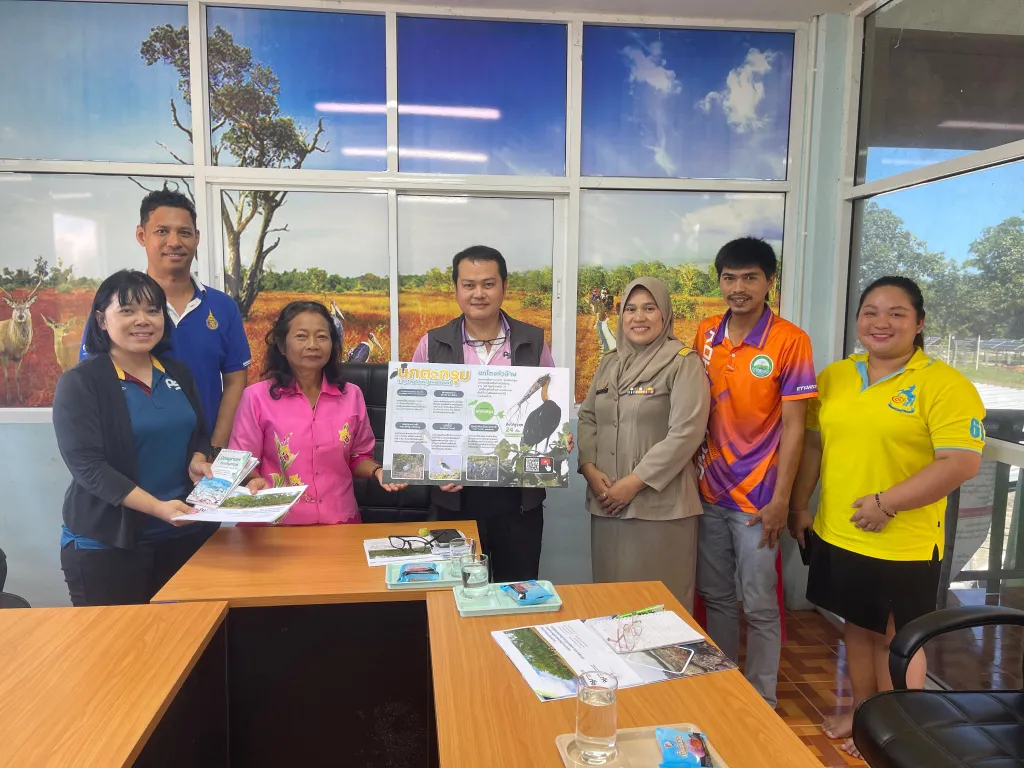
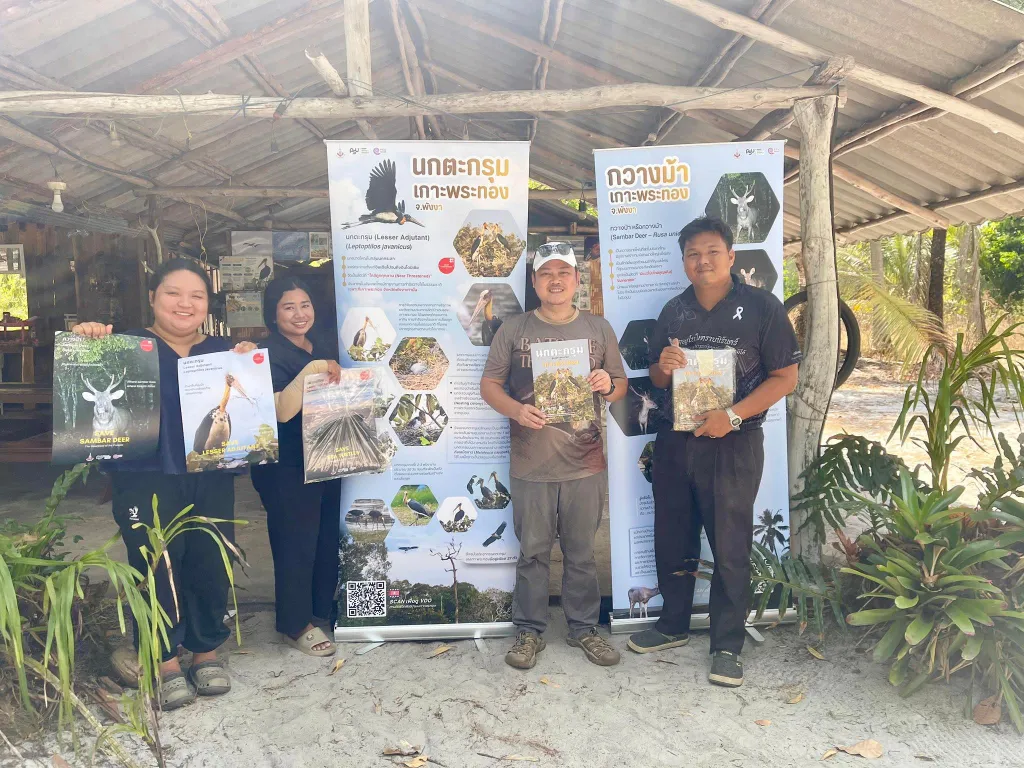
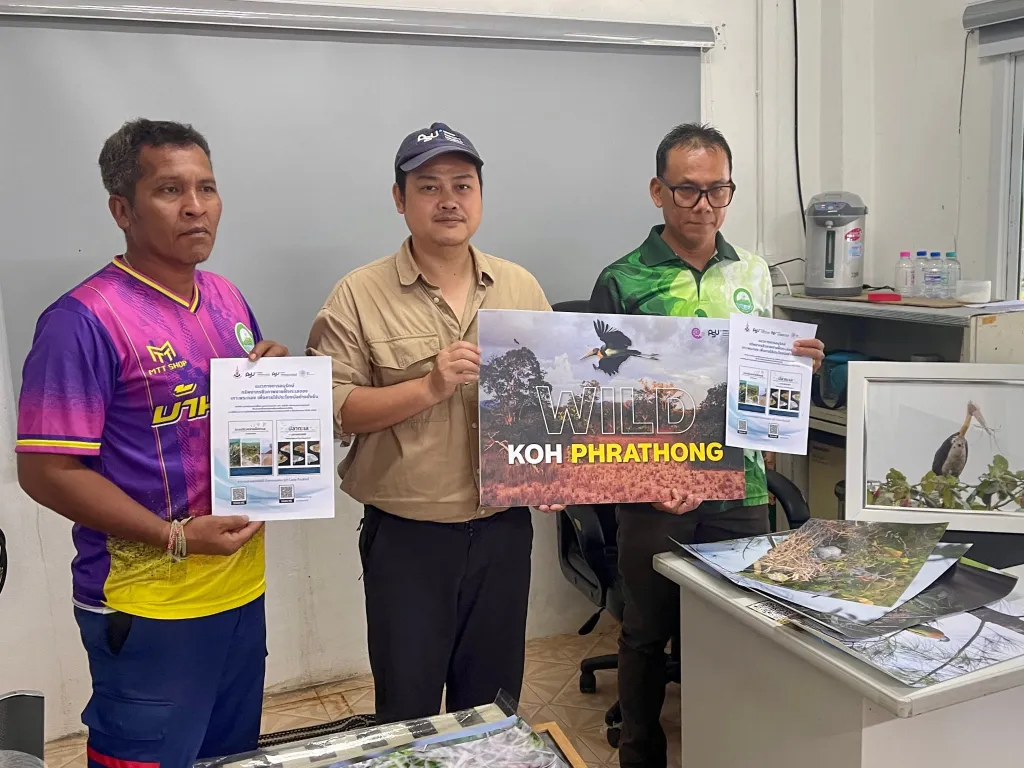
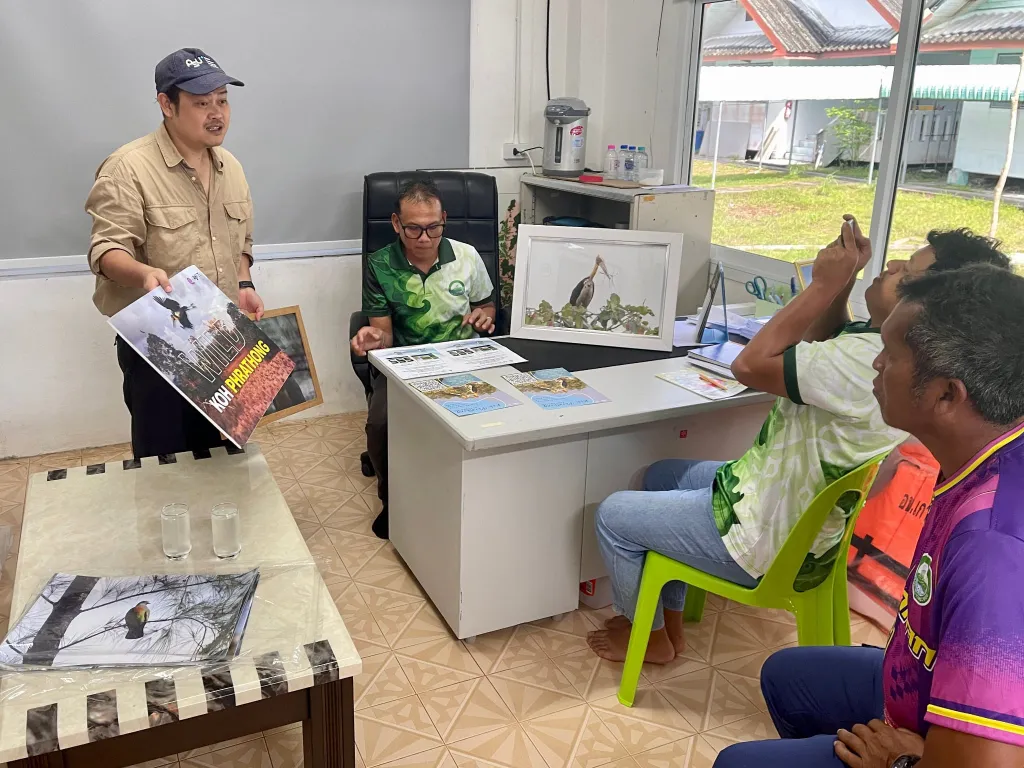
ปี 2568 ต่อเนื่องจนถึงปัจจุบัน ทีมวิจัยจาก พิพิธภัณฑสถานธรรมชาติวิทยา ๕๐ พรรษา สยามบรมราชกุมารี และคณะวิทยาศาสตร์ มหาวิทยาลัยสงขลานครินทร์ ได้ร่วมมือกับ องค์การบริหารส่วนตำบลเกาะพระทอง และ ชุมชนท้องถิ่น สำรวจและจัดกิจกรรมสื่อสารและเผยแพร่ความรู้ด้านความหลากหลายทางชีวภาพบนเกาะพระทอง จังหวัดพังงา โดยเฉพาะสัตว์ป่าหายากอย่าง นกตะกรุม และ กวางป่า ที่ยังคงดำรงชีวิตอยู่ท่ามกลางภูมิทัศน์ของพื้นที่ชุ่มน้ำ หาดทราย และทุ่งหญ้าสะวันนาของเกาะ
กิจกรรมครั้งนี้ประกอบด้วยการแลกเปลี่ยนข้อมูล องค์ความรู้ มอบสื่อ โปสเตอร์ความรู้ หนังสือ และภาพถ่าย เพื่อใช้เป็นสื่อสร้างความตระหนักรู้ในชุมชน รวมถึงเปิดพื้นที่แลกเปลี่ยนความคิดเห็นกับผู้นำชุมชนและเจ้าหน้าที่ท้องถิ่นเกี่ยวกับการอยู่ร่วมกับสัตว์ป่าอย่างเข้าใจและยั่งยืน
การทำงานครั้งนี้สอดคล้องกับ เป้าหมายการพัฒนาที่ยั่งยืนข้อที่ 15 (SDG 15: Life on Land) ที่มุ่งเน้นการอนุรักษ์และใช้ประโยชน์จากระบบนิเวศทางบกอย่างยั่งยืน พร้อมทั้งส่งเสริมการมีส่วนร่วมของคนท้องถิ่นในการดูแลทรัพยากรธรรมชาติในพื้นที่ของตนเอง
PSU Researchers Join Hands with Local Communities and Koh Phra Thong Subdistrict to Promote Wildlife Conservation Awareness
From 2025 to the present, a research team from the Princess Maha Chakri Sirindhorn Natural History Museum and the Faculty of Science, Prince of Songkla University, has been working in collaboration with the Koh Phra Thong Subdistrict Administrative Organisation and local communities to conduct biodiversity surveys and organise knowledge‑sharing activities on Koh Phra Thong, Phang Nga Province.
The initiative focuses particularly on rare wildlife species such as the vulnerable Lesser Adjutant (Leptoptilos javanicus) and the Sambar Deer (Rusa unicolor), which continue to survive within the island’s diverse landscape of wetlands, sandy beaches, and savanna grasslands.
Activities have included exchanging scientific and local knowledge, as well as distributing educational materials such as informational posters, books, and wildlife photographs to raise awareness within the community. The program also created opportunities for dialogue with community leaders and local officials on how people and wildlife can coexist in an informed and sustainable manner.